curated by Kostas Prapoglou
mechanisms of [inter]personal connections is Valli Nomidou’s second solo show at Ekfrasi gallery in Athens. The exhibition is a delicate exploration of the dynamics of connection, dislocation, and the subtle chemistry between form and materiality.
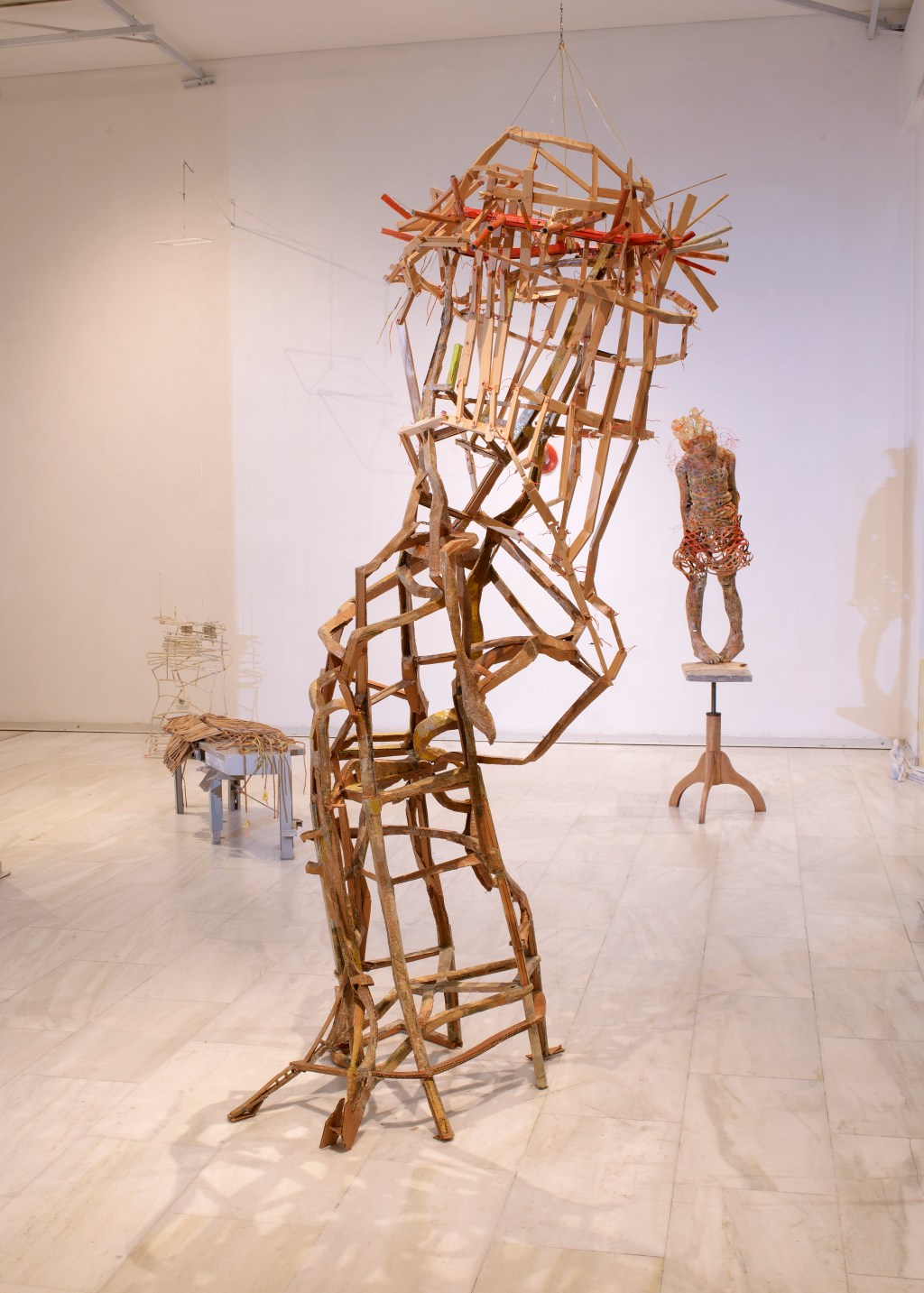
Spanning the entire ground floor gallery space, all sculptures evoke a sense of fragmented wholeness, where various constituents exist as separate yet interdependent parts of a larger narrative. Nomidou’s creative process reflects a tension between rigidity and fluidity, often employing disjointed forms that mimic the organic mechanisms of the human body and the emotional fabric of relationships.
Her visual vocabulary embraces assemblage and collage, where each piece is articulated like a joint, connected through mechanisms that suggest movement, while also implying constraint. This language of ‘articulation’–a key theme in her work–emerges as both a literal and metaphorical reference to the physical body and its interactions. Her compositions frequently feature forms that evoke body parts, furniture and household objects, creating uncanny juxtapositions that blur the boundaries between the animate and the inanimate. Facial characteristics and body parts merge with the structures they rest upon, making everything take on anthropomorphic qualities, emphasising the intimate and interdependent nature of all things.
Nomidou’s materials play a central role in the embodiment of her concepts. She painstakingly creates her figures using a diverse range of paper, from rare handmade sheets to regular newspapers. These layers are not merely decorative but add a complex stratigraphy to the surface of her works. Their uppermost layers are translucent, allowing the deeper strata of pink newsprint to emerge, resulting in a skin-like effect that transmits both fragility and depth.
Colour in these works is not applied but rather inherent to the materials she selects. Manipulating the natural tones of paper and cardboard, she accentuates certain aspects, but often chooses to leave imperfections and variations intact. This nuanced treatment of colour suggests an acceptance of the inherent qualities of the material, allowing the work to speak through its own substance.
All sculptures on view are not merely static objects; they embody a sense of performative process. The structures are built from corrugated cardboard, a material known for its utility and flexibility, which the artist cuts, shapes, and refines using woodworking tools. The delicate paper overlays are sealed with thin layers of glue, crafting a surface that is at once raw and refined. This process transforms ordinary materials into a living organism. Each work reveals traces of its making, with seams and joins visible; a testament to the laborious assembly and the vulnerability of its construction.
Nomidou also incorporates several other materials such as wooden planks, paper cords, and even discarded electrical wires, merging the fine with the coarse, the delicate with the rugged. Such contrasting materials reflect the multifaceted nature of human experience— where soft, polished surfaces coexist with rough, unrefined textures. Her figures become metaphors for the complexities of emotional states and interpersonal exchanges. They are poised between strength and fragility, structure and collapse, echoing the precariousness of the bonds that hold us together.
Her sculptures are not confined to traditional formats; they interact charismatically first with their own bases and their surroundings afterwards. Bases often include additional materials like fabric remnants, wax casts, or light wood constructions, adding another layer of dialogue between object and support. These elements are not merely structural but contribute to the overall narrative of the work. By integrating these materials, Nomidou creates a fusion of sculptural form and conceptual content, making her works feel simultaneously grounded and ethereal.
Nomidou’s practice is imbued with transformation and reinvention. Her sculptures resemble peculiar jigsaws, each part significant on its own but incomplete without the others. This fragmented yet cohesive approach reflects a deep philosophical engagement with themes of identity, presence, and absence. Her works are not only visual objects but also contemplative spaces that urge the viewer to consider the tenuous nature of connection and the intricate choreography of material and form. Through this synthesis of concept, process, and materiality, Valli Nomidou initiates a visual experience that is delicate and profound—a quiet but insistent meditation on the beauty and complexity of the human condition.
 Vally Nomidou
Leave a comment